A sleeping bag insulates the sleeper from above. The ground below is a different problem, and it is the one that makes people cold. Soil, rock and grass hold their temperature far longer than air does, so a night that looks mild on the forecast can still draw heat out of a body through the floor of a tent. The obvious reading of a sleeping mat is that it is for comfort. The larger part of its job is insulation, and a mat is the lower half of the sleeping system.
Conduction is the mechanism. Heat passes directly from a warm body into cold, dense ground, and the part of a bag compressed under the sleeper loses most of its loft exactly where the contact is heaviest. That is why a thin foam mat beneath an expensive bag changes a night more than a heavier bag does.
What an R-value measures
An R-value is a measure of thermal resistance. A higher figure resists heat flow more strongly. Units differ by country: the imperial R-value, the metric equivalent, and the Tog used for textiles all describe the same property with different numbers, so figures are only comparable when the same convention is used.
Pads sold for walking range from about 1 for a thin closed-cell mat to 5 or more for a thick, insulated inflatable. The thermal test for pads measures the sample under a standard load, so the figure describes a new pad at a defined compression. Sandwiched layers add up roughly, which is why a thin closed-cell mat under an inflatable is a common cold-weather arrangement. The two must be in contact, because an air gap between them allows convection and throws away part of the benefit.
The relationship between R-value and comfort is not linear. Doubling thermal resistance halves the heat flow, but the change from 1 to 2 is felt far more than the change from 5 to 6.
Where the heat actually goes
Ground temperature lags air temperature, which is why a mild autumn night on cold, wet soil can be less comfortable than a colder night on dry ground. Several paths take heat away at once.
- Direct conduction through the pad, which the R-value describes.
- Compressed insulation in the sleeping bag beneath the sleeper, where loft has collapsed.
- The pad edge, if the shoulders or hips hang over it, since the bag then rests on cold ground.
- Air movement under the mat on an exposed pitch where cold air pools.
- Moisture, since a damp pad conducts heat away faster than a dry one.
A groundsheet protects the pad from punctures and dirt, and it never counts as part of the R-value.
Closed-cell foam
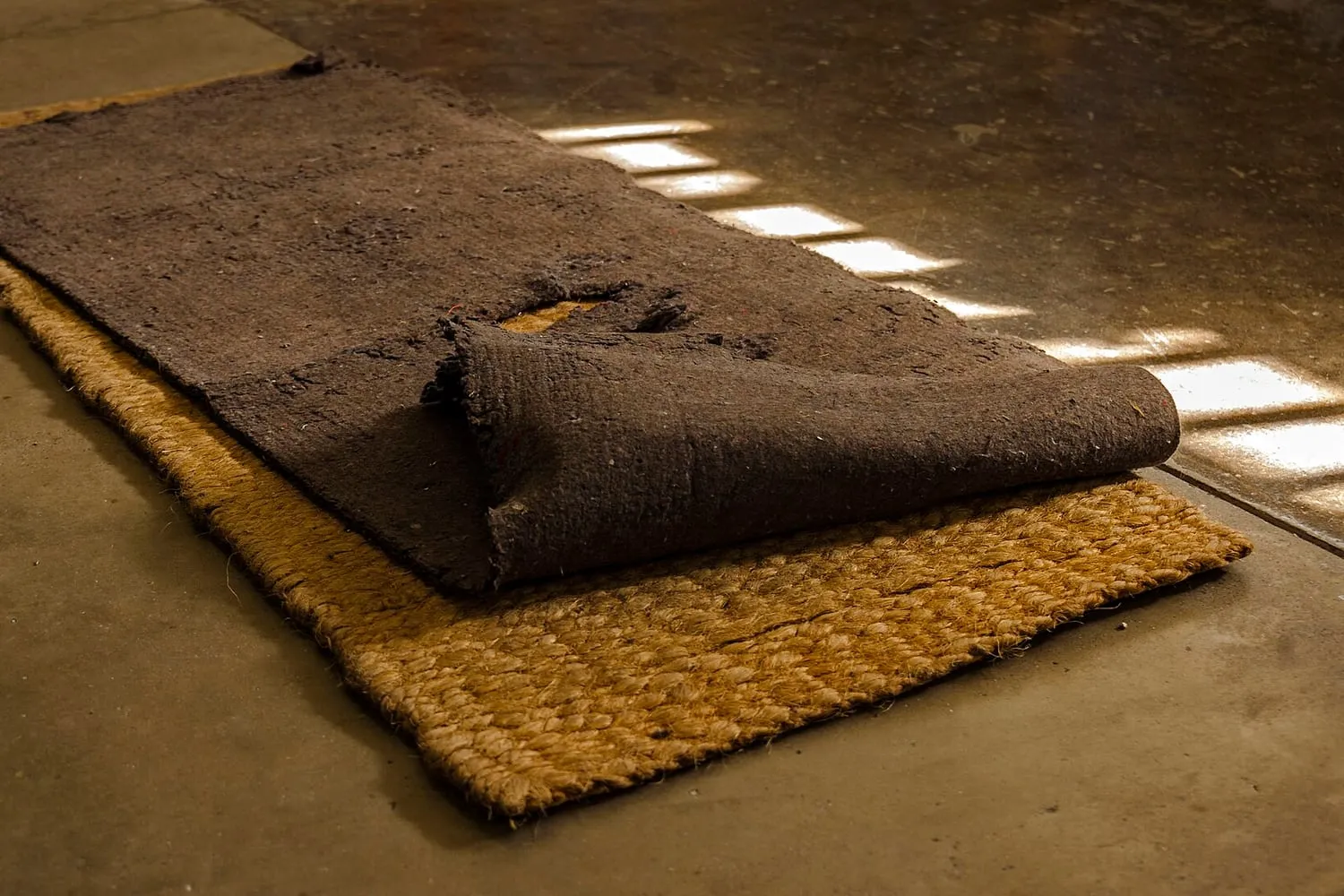
A closed-cell foam mat is the simplest piece of equipment in the pack. Foam cells are sealed, so the mat cannot absorb water, cannot puncture and cannot deflate. It is cheap, it weighs little for its bulk, and it will still work after a decade of abuse.
Its weaknesses are thickness and volume. A closed-cell mat is thin, usually about a centimetre or two, and its R-value is modest. It does not compress, so it takes up as much space in the pack in the evening as it did in the morning, although it can be carried outside the pack or used as a frame sheet.
Two uses make it worth carrying anyway. Cut to torso length, it slips under an inflatable pad to add warmth where the body’s core contacts the ground. Cut shorter still, it becomes a sit pad, a kneeling mat, a pack stiffener and an emergency splint for a damaged pole.
Inflatable pads, with and without foam inside
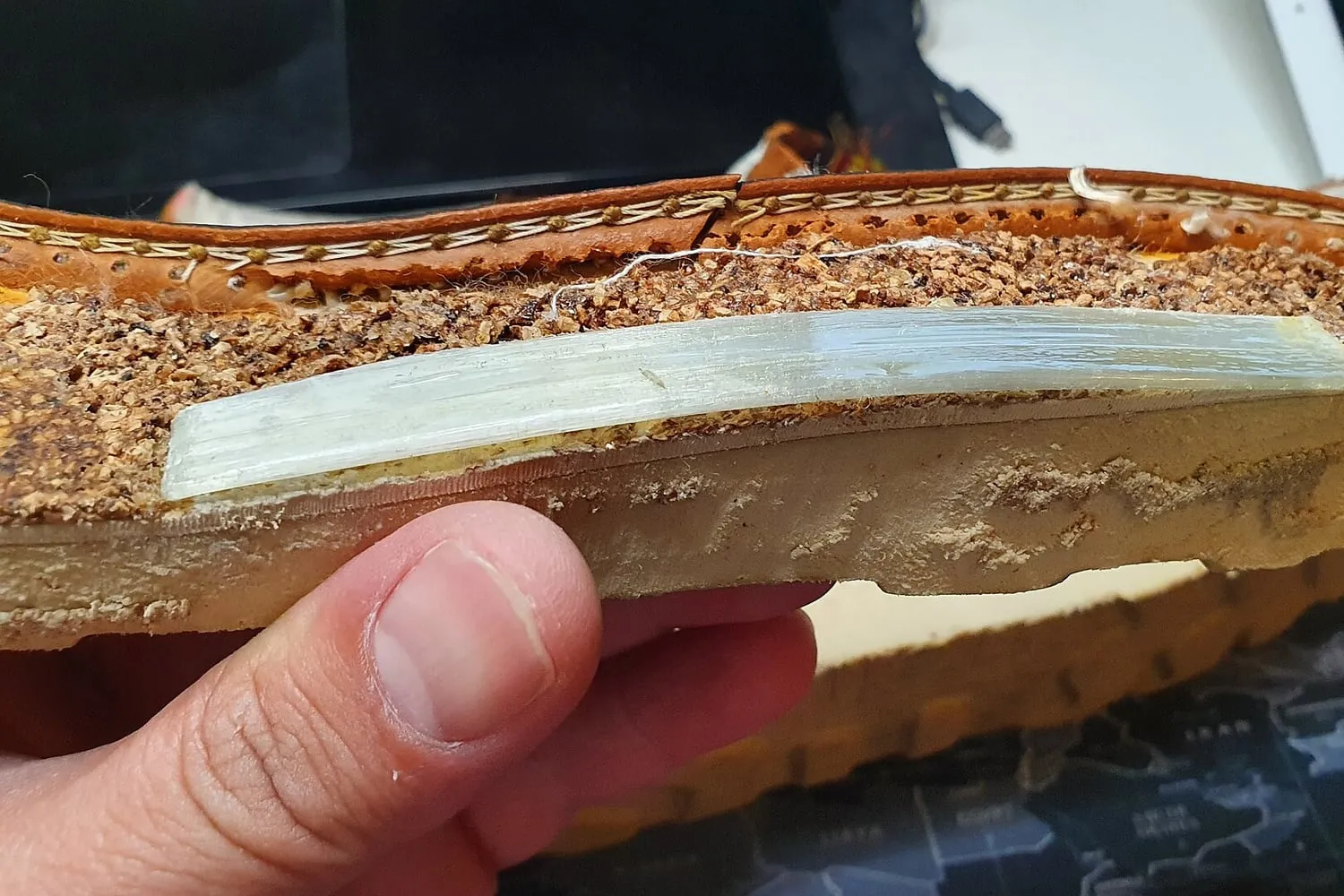
Self-inflating mats contain open-cell foam inside a sealed shell. The foam gives the mat its structure and a good part of its insulation, and the mat self-inflates when the valve is opened, with a few breaths to finish the job. They are comfortable and reasonably durable, and they fail at the shell more often than at the valve. The foam can delaminate after years of rolling, which creates a bubble rather than a hole.
Air pads contain no foam. Air alone convects, so an air pad moves heat from the warm top surface to the cold bottom surface unless something interrupts the circulation. That is what the internal structure is for: a layer of synthetic fill, a reflective film, or baffles that break the pad into narrow channels. Two pads of identical thickness can have very different R-values depending on what is inside them.
Thickness buys comfort, not warmth. A pad of five centimetres cushions a hip bone better than one of two centimetres and keeps a side sleeper off the ground, and a pad of seven to eight centimetres is more comfortable again. The R-value comes from the construction, and a thick pad with no internal structure is a comfortable way to stay cold.
Valves are the part that fails
Most inflatable pad failures in the field involve the valve rather than the surface. Designs differ, and the differences matter more than the marketing suggests.
- A flat valve with a wide opening deflates quickly and usually has a one-way side for inflation, which stops air escaping between breaths.
- A twist valve seals by compression and can be damaged by grit or by over-tightening.
- Pump sacks and inflation bags move air into the pad without breath moisture. Inflating by mouth introduces water vapour, which can condense inside the pad and, in freezing conditions, add weight or block the valve.
Whichever valve the pad uses, the routine is the same: keep the cap closed when the mat is not being inflated, keep grit away from the seal, and check the valve before leaving home rather than on the first cold night.
Punctures and repair
Air pads puncture. Thorns, sharp stones, pine needles, embers from a fire and a dog’s claws all find the shell, and the thinner the shell, the easier it is to find a hole.
Prevention is mostly about the pitch. Clear the ground of stones and sticks, use a groundsheet, keep the pad away from fire and stove, and do not leave an inflated pad in direct sun, where the air inside expands and stresses the seams.
Repair follows a standard sequence. Inflate the pad, listen along the surface, then hold it under water to find the bubbles, which is easier at home than in a tent. A patch needs a clean, dry surface, and a repair on a damp, sandy mat will fail. Self-adhesive patches are quicker and less reliable than a patch with proper adhesive and a few minutes of pressure. Valve assemblies can sometimes be replaced, and spares keep a pad in service for years longer.
Choosing by season and the checks to make
Match the pad to the ground, not only to the air temperature, and read it as one half of a system.
- For summer lowland camping, an R-value around 1 to 2 is adequate on dry ground.
- For three-season walking in Britain, a value around 3 to 4 covers most nights.
- For cold ground, snow and winter camping, look for 5 and above, or stack a closed-cell mat beneath an inflatable.
- Match the mat width to the sleeping bag width, and check that hips and shoulders stay on the pad.
- Test the valve, inflate the pad at home, and carry a patch kit on any trip where a flat pad would end the night.
- Weigh the volume as well as the grams, since a closed-cell mat that will not compress is bulkier in practice than its weight suggests.